
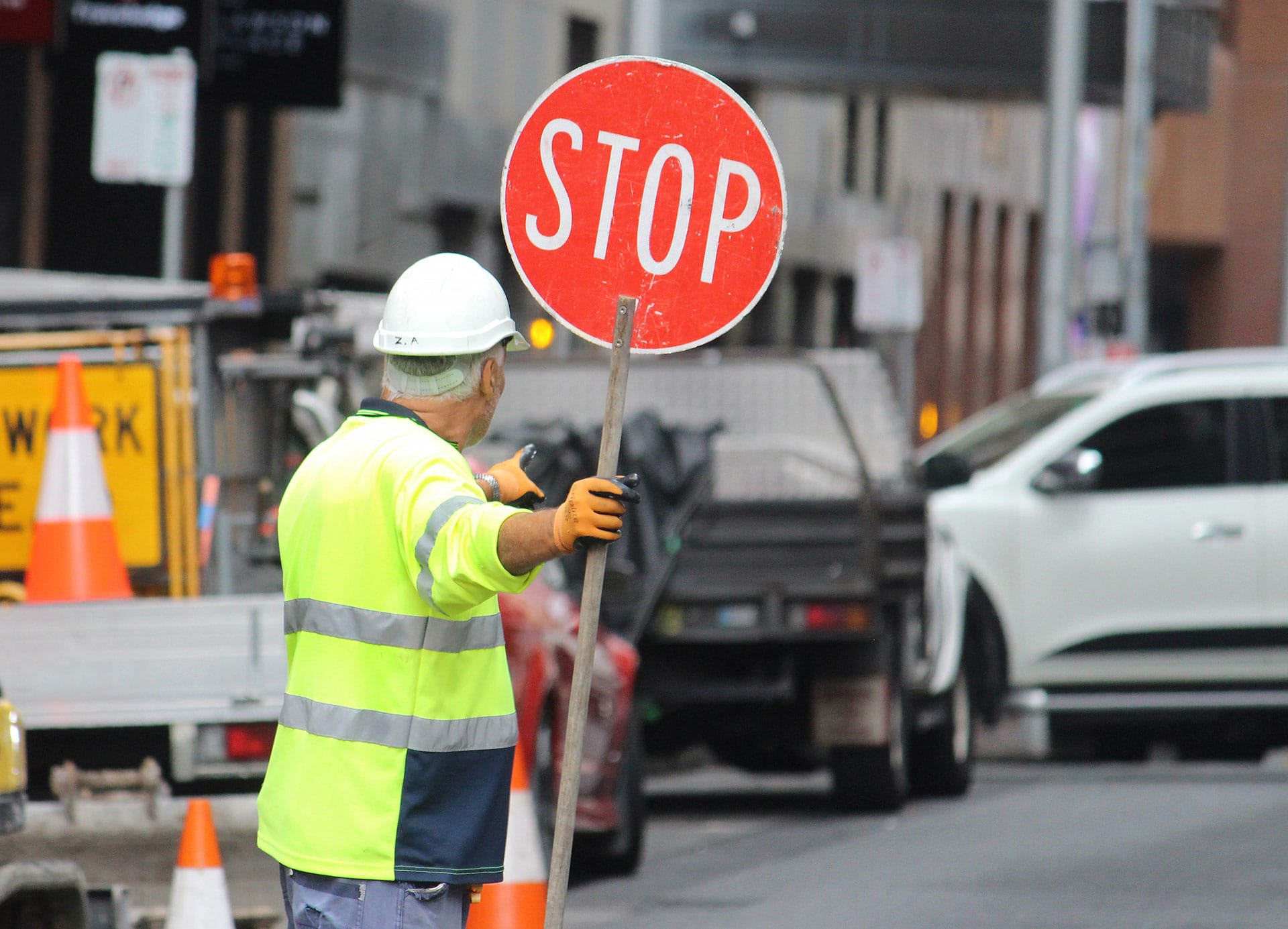
Perth’s infrastructure pipeline is only getting busier. From tight CBD worksites to upgrades along the Mitchell and Kwinana freeways, projects are being delivered in live traffic environments every day.
And that’s just the Metro area. State-wide, the road network stretches more than 180,000 km – about half the distance to the moon or 4.5x the earth’s circumference.
Maintaining this massive road network creates a challenge: how do you keep traffic and work moving without putting people at risk?
That is where traffic management comes in.
What Is Traffic Management?
At its core, traffic management is the planning and control of vehicles and pedestrians around a worksite to keep people safe and traffic moving. It is the system that allows work to happen on or near live roads without creating unnecessary confusion, delay or risk.
It’s also a legal requirement. Main Roads WA, which oversees road safety across the state, outlines detailed standards for traffic management on public roads.
As a responsible and reliable traffic management company, Turtle Traffic delivers these outcomes through structured planning and accredited teams. We collaborate with project stakeholders to keep people safe and work moving.
The Core Components: What Does Traffic Management Actually Involve?
Most people judge traffic management by what they see on the road. In reality, most of the work happens long before that.
Detailed Planning
Every job starts with a site-specific Traffic Management Plan (TMP). A TMP is required for all works or events on a road network, including worksites. It outlines how traffic will move, accounting for road layout, volumes, speeds and timing of major works. There are several types of TMP, from generic to basic, non-complex and complex.
Accredited Personnel
Traffic controllers and supervisors need to be properly trained, certified and capable of managing live risks. That requires people who understand both the plan and how to apply it on site.
Equipment and Communication
Clear communication with road users is critical. This includes signage and barriers, as well as people on the ground. The goal is consistency. Drivers should quickly understand what’s happening and what’s expected of them.
Types of Traffic Management Services
There are many types of traffic management. How we plan and mobilise depends on the type of work being delivered. The most common places you’ll find traffic management in action include:
- Construction and infrastructure: Short-term projects impacting traffic flow, and long-term projects with staged traffic changes.
- Event traffic control: Managing vehicle and pedestrian movement for public events and gatherings.
- Utilities: Managing traffic during works on gas, water, power and communication infrastructure.
- Emergency response: Rapid mobilisation to control traffic after incidents or unexpected hazards.
- Mobile traffic management: Short-duration or moving works such as inspections and maintenance.
For project managers and contractors, it’s important to work with a traffic management company that has demonstrated expertise in similar projects. Or better yet, partner with Turtle Traffic, the team with years of experience in all kinds of traffic management settings.
Why Perth Worksites Have Unique Requirements
Traffic management in WA is part of a tightly integrated system. One that includes the natural and built environments, strict safety regulations, and a road network spanning one-third of the Australian continent.
MRWA Compliance
Main Roads WA (MRWA) is responsible for major freeways and roads that together carry the majority of the state’s traffic. Traffic management on public roads must comply with MRWA requirements, including:
- Being licensed under the MRWA Traffic Management Registration Scheme
- Delivering compliant traffic management plans
Turtle Traffic is fully licensed, enabling us to work across the MRWA network.
AGTTM
The Austroads Guide to Temporary Traffic Management (AGTTM) sets the national framework for planning and delivering traffic management. It outlines risk-based principles and safe work practices, accounting for changing conditions and guiding traffic management teams to apply controls that actually fit the risks at each site.
Local Government Regulations
Local roads fall under council control. While broadly aligned with MRWA guidance, each council has its own approval processes and conditions that need to be factored into planning.
Environmental and Weather Factors
When it comes to safe and responsible traffic management in Perth, the natural environment is just as important as the built environment. From hot days to strong winds and sudden downpours, it’s important to work to the conditions to keep people safe.
Urban vs. Regional Traffic Management
Each traffic management setting introduces different risks. For example, managing vehicle and pedestrian traffic in the CBD is very different to completing work in Albany or Geraldton, where speed and distance become bigger factors. On regional roads, heavy vehicles and road trains are common, presenting entirely different planning considerations.
How Traffic Management in Perth Actually Works
Although every project brings unique risks and considerations, effective traffic management is built on a clear and repeatable process. There are three broad stages in every traffic management plan.
-
Site Assessment
We assess the site to know exactly what we’re dealing with. This includes:
- Understanding traffic behaviour
- Surveying road conditions
- Identifying risks
- Planning signage and barrier positioning
-
Plan Development
Based on what we learn – as well as the MRWA Code of Practice and AGTTM – we prepare a TMP and any supporting traffic guidance schemes.
We also operate under certified management systems, including ISO 9001 (Quality), ISO 45001 (Safety) and ISO 14001 (Environment). Maintaining these standards gives our clients confidence in our compliance and consistency.
-
Implementation and Monitoring
When it’s time to mobilise, our crews will:
- Set up the site
- Communicate the plan to other workers
- Monitor active conditions
- Collaborate with on-site teams to keep everyone safe
Traffic management is not static. The TMP needs to allow for changes on the ground, and crews must be skilled to adapt safely.
The Turtle Traffic Advantage: Beyond the Basics
Traffic management services go beyond directing traffic and meeting minimum standards. Our work is deeply integrated within projects that build WA’s future and allow people to move around more freely. For us, that bigger picture matters.
Sustainability
There is an increasing focus on reducing environmental impact across construction and infrastructure. This includes more efficient deployment, reduced idle time and a state-wide commitment to Net Zero emissions by 2050.
Community First
We work in a wide range of communities, from inner-city suburbs to remote regional areas. By proactively engaging with residents, supporting good causes, and hiring locally where possible, we’re doing our small part to improve lives across Western Australia.
Reliability in Delivery
Traffic management needs to be dependable. The expectation is that teams are ready to work hard and support overall project goals. This is summed up by our motto: “Reliable, Responsible, and Responsive”.
The Bottom Line: What Is Traffic Management?
Traffic management in WA is the bridge between getting work done and keeping people safe. It brings together planning, people, compliance, and communication to manage risk on live roads.
Whether you are looking for a local traffic management expert or planning a major project, it’s essential to partner with an experienced and professional traffic management company.
You can learn more about Turtle Traffic’s traffic management services or get in touch with the team to discuss your project requirements.