
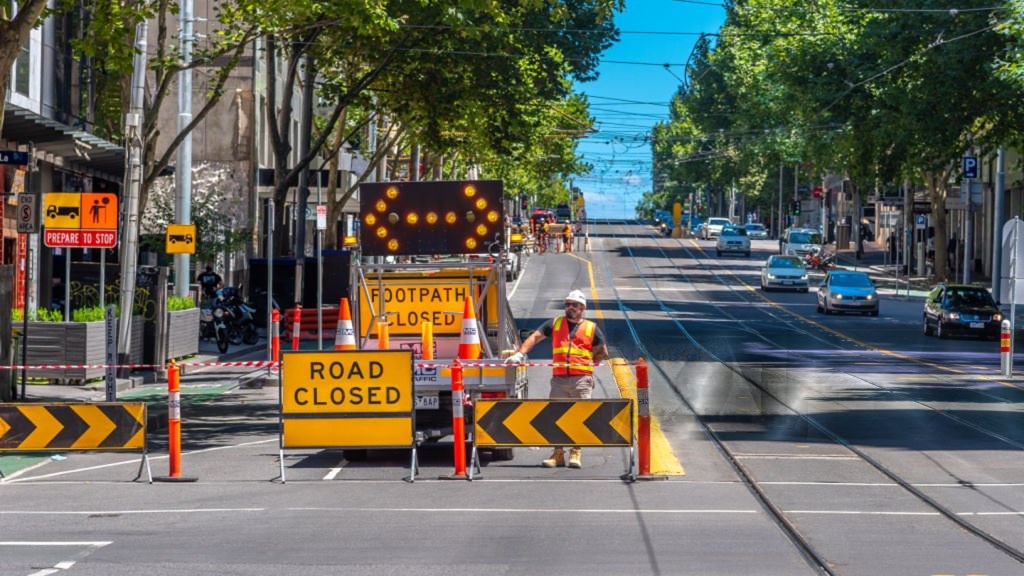
From quiet local streets to busy Perth roads and major regional routes, traffic planning helps keep worksites safe while allowing people, vehicles and pedestrians to keep moving.
But not every traffic management plan is the same.
Some projects only need a straightforward plan with standard controls and minimal disruption. Others involve higher traffic volumes, multiple work stages, major road impacts or detailed coordination with stakeholders. This is where the difference between a complex traffic management plan and a non-complex traffic management plan becomes important.
Understanding which type of TMP traffic management plan applies to your project can help project managers, contractors, councils and event organisers plan earlier, manage risk and meet the right safety and compliance requirements before works begin.
What Is a Traffic Management Plan?
Defining a Traffic Management Plan
A traffic management plan, often shortened to TMP, is a document that outlines how vehicles, pedestrians, cyclists and workers will move safely through or around a worksite, event area or project zone.
A TMP may include details such as signage, lane closures, detours, pedestrian access, traffic control personnel, site access points and Traffic Guidance Schemes. Its purpose is to identify potential risks and set out the controls needed to manage traffic safely while work is being carried out.
Why TMPs Are Important for Perth Projects
For Perth projects, a traffic management plan is especially important because works often need to meet Main Roads WA requirements, local council expectations and broader safety obligations.
A well-prepared TMP can reduce risk, support smoother approvals and help crews work with clearer controls in place. It can also minimise disruption to road users, residents, nearby businesses and the wider community by considering traffic flow, pedestrian movement and access before works begin.
Turtle Traffic holds MRWA accreditation and uses ISO-certified systems across ISO 9001, ISO 14001 and ISO 45001, supporting safe and compliant traffic planning across WA.
For projects that need formal planning support, Turtle Traffic’s Traffic Planning & TMP Design service helps connect the plan on paper with how the works will be delivered on site.
Understanding Traffic Management Plan Classifications
Why TMPs Are Categorised
Traffic management plans are categorised because different projects carry different levels of risk. A short-term job on a quiet local road will not usually need the same level of planning as works on a busy arterial route, near a major intersection or in a high pedestrian area.
The more complex the traffic conditions, the more detailed the planning usually needs to be. This may involve additional controls, staged traffic changes, stakeholder communication and closer coordination between planning teams and crews on site.
That means a simple local maintenance job is not overcomplicated, while a high-impact project gets the extra planning it needs before crews arrive on site.
Factors That Influence Complexity
Several factors can influence whether a TMP is considered complex or non-complex. These can include:
- Traffic volume
- Road type
- Speed limits
- Pedestrian activity
- Project duration
- Number of work stages
- Impacts on surrounding infrastructure
A short inspection or minor maintenance task may be relatively simple to manage. Works that run over several days, involve changing traffic conditions or affect access to nearby roads, businesses or services may require a more detailed traffic management plan.
Complexity is not just about project size. It is about the level of risk, disruption and coordination involved.
What Is a Non-Complex Traffic Management Plan?
Definition of a Non-Complex TMP
A non-complex traffic management plan is generally used for straightforward works where the risks and traffic impacts are lower. These projects usually involve predictable conditions, limited disruption and simpler traffic control measures.
Even when the works are straightforward, the TMP still needs to show how workers, road users, pedestrians and nearby properties will be kept safe. The difference is that the controls are usually more standard and easier to implement.
Common Characteristics
A non-complex traffic management plan may apply to projects with low to moderate traffic volumes, short work durations and minimal impacts on lanes, roads or access points. These jobs often use standard traffic control setups and simple Traffic Guidance Schemes that are easier for crews and road users to follow.
Examples of Non-Complex Projects
Common examples of non-complex projects may include:
- Routine maintenance works
- Footpath repairs
- Utility inspections
- Minor landscaping projects
- Short-term local council works
In these situations, the goal is still to keep people safe, maintain traffic flow where possible and minimise disruption while the work is completed.
What Is a Complex Traffic Management Plan?
Definition of a Complex TMP
A complex traffic management plan is generally required when traffic conditions, site risks or project requirements are more challenging. These projects may involve busier roads, higher speeds or greater public impact. They may also involve multiple work stages or more detailed coordination between contractors, councils, road authorities and other stakeholders.
Because the risks are higher, a complex TMP usually needs more detailed planning, risk assessment and site-specific controls. It also needs to consider how the work will be delivered in real conditions, not just how traffic will be managed on paper.
This is where Turtle Traffic’s experience across live traffic environments matters, from Perth CBD works through to remote and regional WA infrastructure projects.
Common Characteristics
A complex traffic management plan may be needed for projects involving high traffic volumes, major lane or road impacts, complex detours, significant pedestrian management requirements or extended project durations.
These works may also involve multiple traffic stages, changing site conditions or impacts on surrounding infrastructure such as intersections, access roads, public transport routes, nearby businesses or essential services.
Examples of Complex Projects
Examples of complex projects may include:
- Major road upgrades
- Highway works
- CBD construction projects
- Large infrastructure developments
- Utility projects affecting arterial roads
- Large public events
For these projects, early planning is especially important. A well-prepared complex traffic management plan can help reduce safety risks, support compliance and give everyone involved a clearer understanding of how traffic, pedestrians and site access will be managed from start to finish.
Key Differences Between a Complex and Non-Complex Traffic Management Plan
The easiest way to compare the two is to look at how each plan responds to risk, road conditions, staging and stakeholder impact.
| Area of Difference | Non-Complex Traffic Management Plan | Complex Traffic Management Plan |
| Project risk | Lower-risk works with predictable site conditions | Higher-risk works with more challenging conditions |
| Traffic conditions | Low to moderate traffic volumes | High traffic volumes or difficult traffic environments |
| Road impacts | Minimal lane, road or access impacts | Major lane closures, road impacts or complex detours |
| Work duration | Short-term or limited-duration works | Longer works with extended timeframes |
| Work stages | Simple setup with limited staging | Multiple stages or changing traffic arrangements |
| Pedestrian management | Basic pedestrian controls where needed | More detailed pedestrian access or separation measures |
| Traffic Guidance Schemes | Simple TGS layouts | More detailed or staged Traffic Guidance Schemes |
| Stakeholder coordination | Limited coordination may be required | Greater coordination with councils, road authorities, contractors, businesses or the public |
| Planning detail | Standard controls may be suitable | Detailed risk assessment and site-specific controls are usually needed |
Choosing the right TMP helps make sure the controls are suitable for the project. If the plan is too basic for the level of risk, workers and road users may be exposed to avoidable hazards. If the plan is more detailed than required, the project may become harder to manage than it needs to be.
For projects where the classification is unclear, professional Traffic Planning & TMP Design support can help identify the right level of planning before works begin.
Frequently Asked Questions
What determines whether a traffic management plan is complex?
A traffic management plan may be considered complex when the project involves higher risk, greater traffic impacts or more detailed coordination. Factors can include traffic volume, road type, speed limits, pedestrian activity, project duration, staging, detours and impacts on surrounding infrastructure.
Can a non-complex TMP become complex during a project?
Yes. A non-complex TMP can become more complex if the scope of work changes, site conditions shift or the project begins affecting traffic, pedestrians or access in a more significant way. This is why TMPs should be reviewed when project conditions change.
Who prepares a traffic management plan?
A traffic management plan should be prepared by suitably qualified traffic planning professionals who understand Main Roads WA requirements, site risks, Traffic Guidance Schemes and practical delivery needs. For Perth and regional WA projects, planning should also consider local conditions and how the controls will work on site.
Do complex TMPs require additional approvals?
Complex TMPs may require more detailed review, coordination or approvals because they often affect higher-risk roads, larger traffic movements, public events or access for surrounding properties. Projects involving major roads or significant changes to traffic movement should be planned early so the right requirements can be identified.
How long does it take to prepare a TMP?
The timeframe depends on the project’s scope, location and complexity. A simple TMP may be quicker to prepare, while a complex traffic management plan can take longer because it may require site assessments, stakeholder input, staged planning and more detailed risk assessment. The safest approach is to start the TMP process early, especially when council approvals, major roads or staged works may be involved.
Getting the Right Traffic Management Plan in Place
The right traffic management plan should match the actual conditions of the project. Straightforward works may only need standard controls, while higher-risk works need more detailed planning, staging and coordination.
Choosing the right level of planning is essential for safety, compliance and project success. It helps protect workers, road users and the community while giving the project a clearer path from planning through to delivery.
With a Perth Metro head office in Bassendean, a regional depot in Albany, MRWA accreditation and ISO-certified systems, Turtle Traffic supports traffic planning across Perth and regional WA.
Contact our team for Traffic Planning & TMP Design support for Perth and regional WA projects.